
Top 7 Air Pollution Control Equipment Every Manufacturing Plant Must Have
Today, air pollution control equipment plays a vital role in supporting cleaner processes, healthier workspaces, and more efficient plant operations. But the challenge is which solution best fits their industrial process and pollutant load.
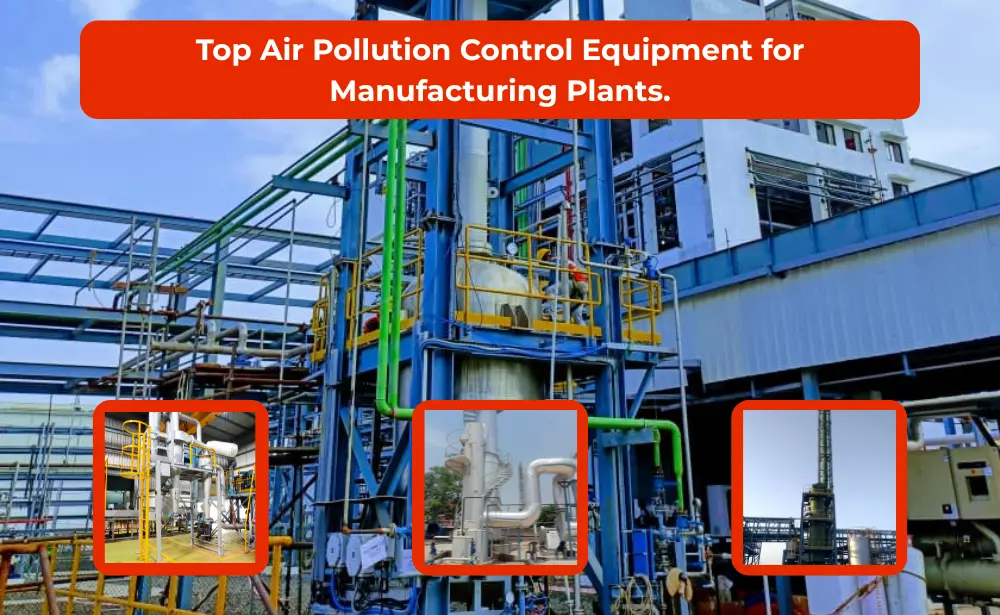
Whether your plant handles a lot of dust or runs busy chemical processes, choosing the right industrial air pollution control systems helps reduce maintenance issues and create a safer workplace.
This guide explains the top 7 air pollution control tools every manufacturing plant should have and shows where each one works best.
Why Air Pollution Control Equipment Is Essential for Manufacturing Plants
Manufacturing plants need industrial emission control equipment to deal with one or more forms of airborne pollutants:
- Dry dust and powder
- Welding fumes
- Chemical vapors
- Acidic gases
- Smoke and oil mist
- Fine particulates
TNBi designs these industrial air pollution control systems to mitigate all these challenges and improve process efficiency.
Let’s look at the top 7 air pollution control equipment list.
1. Bag Filters for Fine Dust and Powder Control
Bag filters are widely used in manufacturing plants because they capture even the fine dry dust particles very effectively.
TNBi’s pulse-jet bag filters offer 99.9% filtration efficiency, making them a great choice for industries that handle powders, cement, chemicals, and minerals, as well as for dry-process emissions.
Best applications
- Cement and minerals
- Chemical powder handling
- Food and pharma powders
- Material transfer points
- Grinding and milling unit
Why do plant managers choose it?
- Automatic pulse-jet cleaning
- Long filter bag life
- Low maintenance
- High-volume dust collection
In plants where dust is a regular problem, bag filters help keep the air clean, protect equipment, and reduce emissions.
2. Wet Scrubbers for Dust, Gases, Fumes, and Acidic Emissions
Wet scrubbers provide reliable control of Dust & Gaseous pollutants, improving air quality and ensuring safe, compliant workspace environments.
TNBi offers multiple scrubber configurations, including:
- Venturi scrubbers
- Packed bed scrubbers
- Multi-stage scrubbers
- Horizontal scrubbers
- Flue gas desulfurization systems
These systems are designed for pollutants such as:
- HCl
- HF
- SOx
- NOx
- Acidic fumes
- Chemical vapors
- VOCs
- & Many more
Best applications
- Chemical plants
- Pharmaceuticals
- Metal finishing
- Fertilizer Complex
- Process industries
- Solar Industries
- Batteries & Semiconductor
- Explosive Industries
- Speciality Chemicals
- Paints & Pigments
- Pesticides Industry
For plant managing corrosive emissions, this is one of the most effective industrial air purification systems available.
3. Cyclone Separators for Particulate Removal
Cyclone separators are highly effective industrial air pollution control systems used for removing particulates from gas streams.
TNBi’s cyclone separators use centrifugal force to separate dust and powder, and they require little maintenance.
Ideal use cases
- Crushers and conveyors
- Grain and powder handling
- Mineral processing
- Reactor’s exhaust
- Drying Applications
- Pre-filtration before bag filters
- Wood Processing
- Dryer, Furnaces, & kilns/Calciners
Operational advantage
Cyclones are often used to collect particles without cross-contamination.
This helps operations teams lower their consumable costs.
4. Cartridge Filters for Compact Dust Collection
When floor space is tight, cartridge filters are essential air filtration systems for manufacturing plants because they provide efficient filtration without occupying much space.
TNBi’s cartridge filter dust collectors are designed for:
- Compact layouts
- Fine dust capture
- Low-footprint installation
Best suited for
- Fabrication units
- Metal workshops
- Silo Vent Exhaust
- CNC operations
- Compact process rooms
- Paints, coatings, and inks
For plant with limited space, these systems work efficiently without requiring much space.
5. Activated Carbon Filters for VOC and Odor Control
These advanced industrial air purification systems control VOCs, odors, and chemical vapors, making the workplace safer and helping you stay compliant.
Activated carbon filters are ideal for:
- Paint booths
- Solvent-based processes
- Chemical manufacturing
- Pharmaceutical units
Key pollutants controlled
- VOCs
- Odors
- Solvent fumes
- Organic vapors
This equipment stands out as a vital piece of industrial emission control equipment for modern, forward-thinking process plants.
6. ATEX-Compliant Dust and Fume Control Equipment
Special dust- and fume-control equipment helps safely manage combustible dust, reduces explosion risk, and protects the workplace.
TNBi’s ATEX-compliant bag filters are designed specifically for
- Food powders
- Chemicals
- Pharma APIs
- Metal dust operations
- Explosive powder handling
For operations heads, this equipment directly supports:
- Worker safety
- Fire risk mitigation
- Statutory compliance
This is especially important in areas with a high risk of dust explosions.
7. Classifier Systems for Fine Powder Separation and Recovery
TNBi’s classifier system offers dual benefits: Product recovery and minimum maintenance
Because it has no moving parts, this system efficiently separates particles between 5 and 300 microns.
We have an in-house R&D setup for material classification trials.
Best use cases
- Fine powder recovery
- Material classification
- Process optimization
- Product yield improvement
How to Choose the Right Industrial Air Pollution Control Systems
Choosing industrial air pollution control systems based on pollutants, process conditions, and plant goals ensures optimal air quality, compliance, and operational efficiency.
For example, plants with a lot of dust need different solutions than those with chemical vapors or acidic gases. Space, airflow, and compliance needs also affect your choice.
The table below provides a quick reference for plant managers and operations heads.
Process Challenge / Pollutant Type | Recommended Air Pollution Control Equipment | Best-Suited Industries | Key Benefit |
Fine dry dust and powder | Bag Filters | Chemicals, minerals, food processing, powder manufacturing and many more | High-efficiency particulate capture |
Dust removal with high efficiency | Cyclone Separators | Cement, mining, bulk material handling and many more | Product recovery |
Acidic fumes and chemical gases | Wet Scrubbers / Packed Bed Scrubbers | Chemical plants, pharma, fertilizer, solar, semiconductor, and many more | Neutralizes corrosive emissions, hazardous gases, and pollutants |
VOCs, solvent vapors, and odors | Activated Carbon Filters | Paint, solvent, pharma, specialty chemicals and many more | Controls gaseous contaminants |
Limited floor space dust control | Cartridge Filters | Workshops, fabrication, CNC units, Paints, coatings, and inks and many more | Compact high-efficiency filtration |
Combustible dust environments | ATEX-Compliant Dust & Fume Control Equipment | Food powders, APIs, and metal dust and many more | Improves process safety |
Fine particle separation and recovery | Classifier Systems | Fine chemicals, powder processing and many more | Improves yield and air cleanliness |
The table below provides a quick reference for plant managers and operations heads.Using several industrial air pollution control systems together makes your system more efficient, reduces maintenance, and provides better emission control.
This process-led approach helps plant managers choose systems that support compliance, worker safety, and long-term operational reliability.
Final Thoughts
For manufacturing plants, the right air pollution control equipment isn’t just about compliance; it’s a strategic investment in operational excellence.
The right system greatly improves air quality, protects equipment, keeps workers safe, and reduces maintenance and downtime costs.
Take the next step: review your plant’s systems and talk to a specialist to make sure your operation is safe, compliant, and ready for long-term success. Contact our engineers today.
Frequently Asked Questions
What is the most commonly used air pollution control equipment in manufacturing plants?
The most common air pollution control equipment in manufacturing plants includes Bag Filters, Wet Scrubbers, and Cyclone Separators. Bag Filters are ideal for dust and powder control, while Scrubbers handle fumes and gases. These form the core of most industrial air pollution control systems.
Which industrial air pollution control systems are best for dust-heavy plants?
For dust-heavy plants, the most effective industrial air pollution control systems combine cyclone separators and bag filters. This setup is widely used in powder-handling, mineral, cement, and bulk-material processing plants.
What is the difference between a Scrubber and a Bag filter?
A Bag filter removes dry dust and particulate matter, while a scrubber removes fumes, gases, and chemical vapors. Both are essential pollution control devices in industries, but the right choice depends on whether the process emits solids or gaseous pollutants.
How do plant managers choose the right air pollution control equipment?
Plant managers select air pollution control equipment based on pollutant type, airflow volume, particle size, and compliance needs. Dust-intensive processes require filtration systems, while chemical emissions need scrubbers or carbon filters. The best industrial air pollution control systems are always process-specific.
Which air pollution control equipment is best for chemical plants?
Wet scrubbers, packed bed scrubbers, and activated carbon filters are best for chemical plants. These systems effectively remove acidic gases, chemical vapors, and VOCs while ensuring safety and compliance.