
Optimizing Efficiency: Tips from a Cyclone Dust Collector Systems Manufacturer in Pune
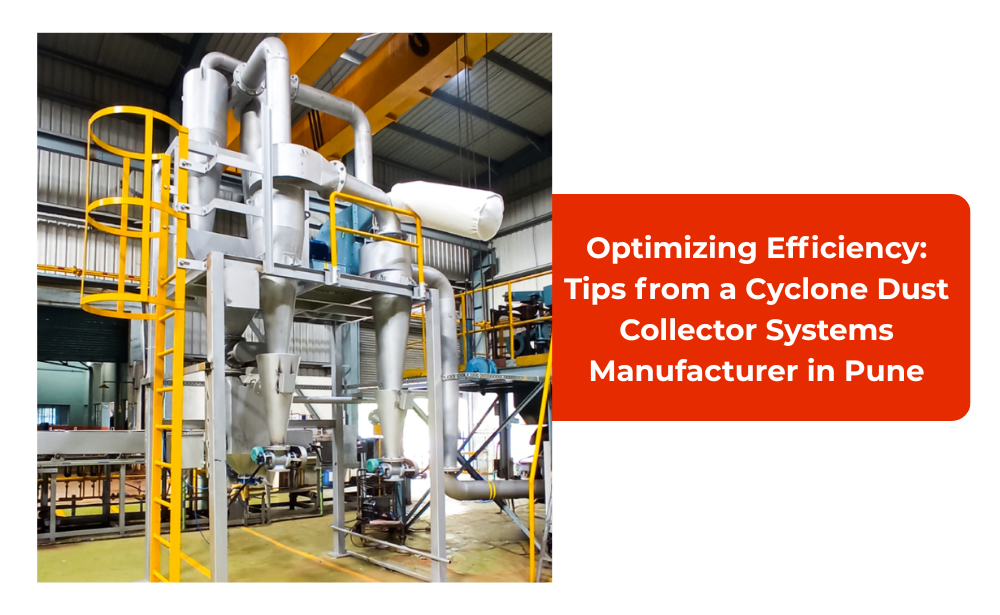
From polymer processing plants facing weekly fire incidents to cement facilities struggling with bag filter choking, the pattern is clear: cyclone separator efficiency isn’t just about the equipment—it’s about understanding your exact dust profile and matching technology to reality.
As a leading dust control systems manufacturer in Pune, we’ve learned that optimizing cyclone performance starts long before installation. Here’s what actually works in Indian industrial conditions.
Understanding Your Dust Profile: The Foundation of Efficiency
Most manufacturers approach us asking, “What size cyclone do I need?” But that’s the wrong first question.
The right question is: “What’s the impact my dust is creating?”
Industrial cyclone dust collectors work on centrifugal force; dust particles swirl outward while clean air exits from the top.
We recently replaced a failing bag filter system at a polymer plant where 90% of particles measured below 9.1 microns. Their dust load reached 8750 mg/Nm³—far beyond what fabric filters could handle. The facility experienced frequent fires and 18-hour downtimes every time bags failed under pressure and heat.
Our multi-cyclone dust collection systems solution brought emissions down to below 25 mg/Nm³ with 99.72% collection efficiency, eliminated fire risk entirely, and restored continuous operation.
Dust Loading: Gas streams carrying 500 mg/Nm³ behave very differently from those at 8000+ mg/Nm³. High dust loads overwhelm bag filters but are exactly where cyclones excel: no fabric to clog, no filters to replace, no choking points.
Operating Temperature: Our cyclone separators handle flue gas temperatures up to 1100°C directly, critical for boiler outlets, furnace extraction, and kiln applications across steel, cement, and power generation sectors.
Cyclone Dust Collector Sizing: Getting the Engineering Right
Here’s where many installations fail: cyclone dust collector sizing isn’t a catalog selection—it’s custom engineering based on your specific gas flow, dust characteristics, and emission targets.
Gas Flow Rate Matters: Cyclone performance depends on maintaining proper gas velocity through the separator. Too slow, and particles won’t separate. Too fast, and you’ll create excessive pressure drop and re-entrainment of collected dust.
Pressure Rating Considerations: Standard cyclones operate near atmospheric pressure, but what if you’re working under vacuum or positive pressure? TNBi cyclones are engineered to withstand conditions from vacuum to 33 bar pressure, essential for pneumatic conveying integration and pressurized process environments.
Space Constraints: We design single cyclone units for simple applications, but when space is constrained or efficiency targets are high, multi-cyclone dust collection systems with twin, quad, or six-pack arrangements deliver superior performance in compact footprints.
When Cyclones perform better:
Three scenarios where industrial cyclone dust collectors aren’t just better, they’re essential:
High-Temperature Applications: Cement kilns, boiler flue gas, furnace extraction, metal melting operations. Cyclones handle upto 1100°C without degradation.
Combustible Dust Handling: Aluminum powder, pharmaceutical intermediates, food processing fines, polymer pellet dust. Cyclones reduce ignition sources and can be specified with ATEX compliance for explosive atmospheres.
Heavy Dust Loading: Mill outlets, spray drying, powder coating lines, material transfer points. Cyclones thrive in the above conditions; they’re designed specifically for primary separation before fine filtration.
Optimizing Existing Cyclone Systems
If you already have cyclones installed but aren’t hitting target efficiency, consider these optimization strategies:
Inlet Velocity Adjustment: Cyclone separation depends on achieving proper tangential inlet velocity. Too low, and particles won’t separate. Simple ductwork modifications or fan adjustments can dramatically improve performance.
Dust Discharge Management: Cyclones fail when collected dust re-entrains into the airstream. Ensure your rotary airlock or discharge valve maintains proper seal and operates at correct speed. We’ve seen 15-20% efficiency improvements just by fixing discharge issues.
Multi-Stage Configuration: Single cyclones typically achieve 85-95% efficiency on fine particles. Adding a second-stage cyclone or downstream bag filter captures remaining fines, achieving emissions below 25 mg/Nm³ while the cyclone handles bulk dust load.
The TNBi Advantage: Custom Engineering for Pune Industries
As a cyclone dust collector systems manufacturer in Pune, we engineer every system based on actual dust testing, gas flow calculations, and emission requirements, not standard models.
Our approach starts with understanding your process:
- What’s generating the dust?
- Where in your production line does emission occur?
- What are your regulatory emission limits?
- What’s your available space and utility connections?
- Are there temperature, pressure, or safety considerations?
Then we engineer accordingly, selecting proper cyclone separator efficiency targets, sizing for actual load conditions, specifying materials of construction for your environment, and integrating seamlessly with your existing equipment.
Real-World Results: From Fire Risk to Zero Incidents
That polymer processing facility we mentioned? They came to us after their third bag filter fire in six months. Each incident meant 18 hours of downtime, tens of thousands in filter replacement costs, and serious safety concerns.
We replaced their combustible fabric filter with our high-efficiency cyclone system. The result:
- Emissions dropped from uncontrolled levels to below 25 mg/Nm³
- Collection efficiency reached 99.72%
- Zero fire incidents since installation
- Higher product recovery and continuous uptime
- Eliminated filter bag replacement costs entirely
Making the Right Choice for Your Facility
Industrial cyclone dust collectors deliver unmatched reliability in high-dust, high-temperature applications. They eliminate fire risks, reduce maintenance dramatically, and handle dust loads that overwhelm filtration systems.
But they’re not universal solutions. Fine particle capture below 3 microns typically requires bag filters or wet scrubbers. Gas absorption needs chemical scrubbing. The best dust control systems manufacturer in Pune will tell you honestly what technology fits your application not just sell what’s on the shelf.
For mills, furnaces, dryers, material handling, and primary dust collection where temperatures run high and dust loads are heavy, properly sized multi cyclone dust collection systems deliver optimal efficiency with minimal maintenance.
Ready to optimize your dust collection system? Share your dust load data, emission targets, and process conditions. We’ll engineer a cyclone solution sized exactly to your requirements or tell you honestly if a different technology would serve you better.
Frequently Asked Questions
What is cyclone dust collector sizing based on?
Can cyclones handle very fine dust below 5 microns?
What's the difference between single and multi-cyclone dust collection systems?
How do I know if I need cyclone separator efficiency optimization?
Why choose a dust control systems manufacturer in Pune specifically?
Manufacturers based in Pune understand industrial conditions across Maharashtra, monsoon humidity effects, space constraints in older facilities, integration with existing Indian-made equipment, and quick access for service and modifications.
About TNBi Industries: Based in Pune, Maharashtra, TNBi Industries has engineered dust control solutions for 25+ years across cement, steel, pharmaceutical, food processing, and chemical sectors. Our cyclone separators handle applications from ambient to 1100°C, vacuum to 33 bar pressure, achieving emissions below 25 mg/Nm³ where required.